Hand-Bound Magical Record
- Next step
- Purchase at checkout.
The Magical Record is the central instrument of Western esoteric practice. It is where ritual is written down, vision preserved, and the work of a lifetime accumulated. It will be written in for twenty years and read in a hundred. The object that holds it has to be equal to that.
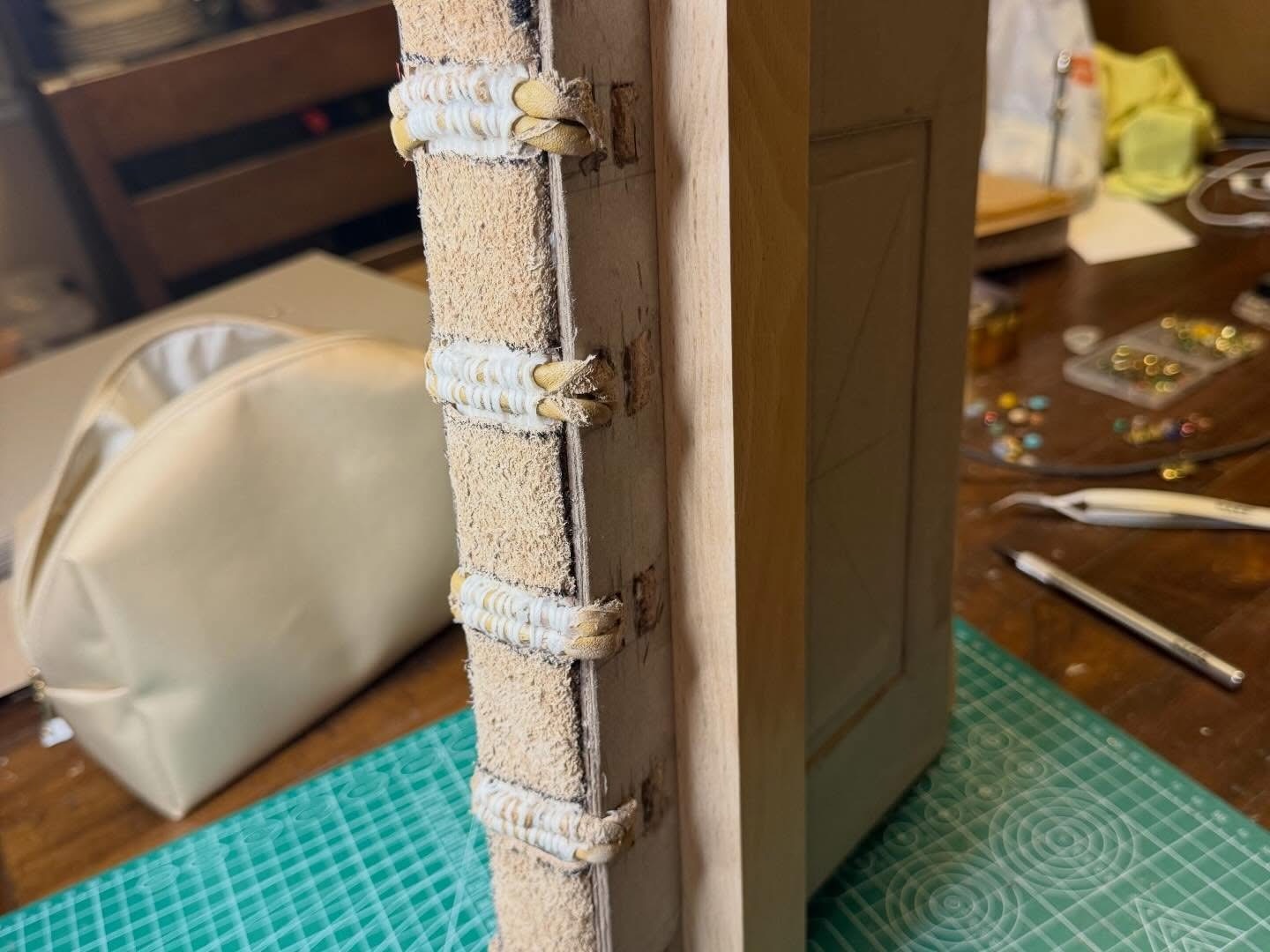
Ours is built to the medieval structure. The pages are folded into signatures, and the signatures are sewn one by one onto supports in a frame, boards laced on through the cords, full goatskin over the top. It is the construction J.A. Szirmai documents in The Archaeology of Medieval Bookbinding, and it is why those books still open flat after six hundred years while a modern glued binding cracks its spine in a week. There is no fast version of it. That is the point.
We make it in two forms. Same structure, same leather, same paper. The difference is what is added.
Full Goatskin — $1,250
The covering leather is TALAS Alran goatskin. Full vegetable tannage, aniline dyed, hand boarded four times for a tight, even grain. At 0.9 to 1.1 mm it covers crisply and it improves with handling. Choose your colour from the Alran range.
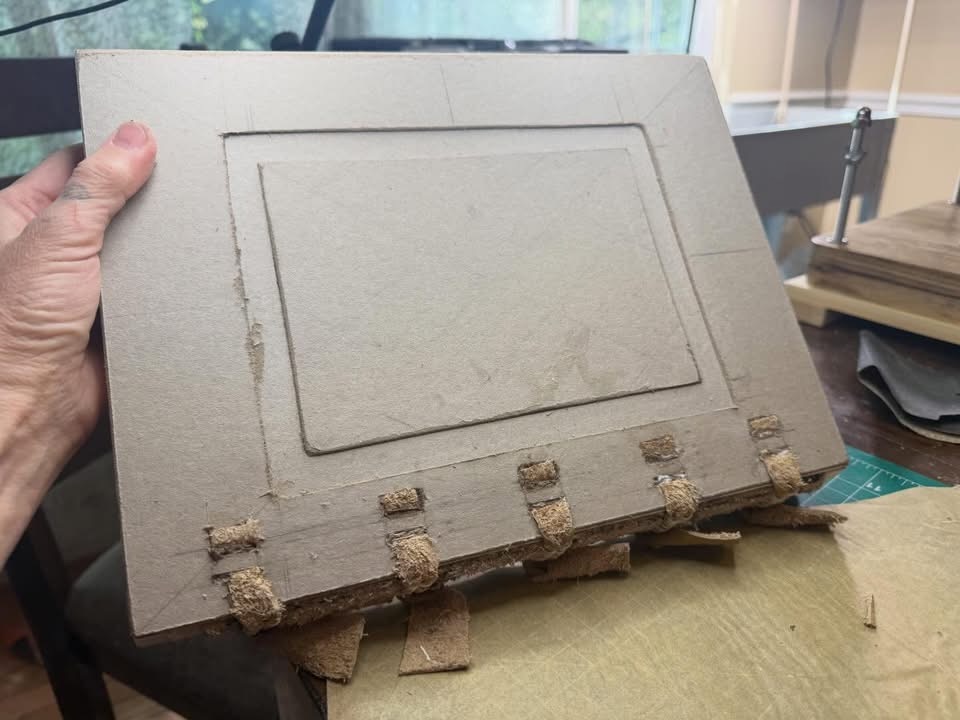
The text block is made of folded signatures, not single sheets glued at the spine. Each signature is sewn onto supports stretched in a frame, the thread passing around the support and back, so that every signature is locked to the one above and below it. The boards are then laced on through those supports. The whole book is held together mechanically before any adhesive touches it. The front board carries a blind-tooled double-rule border: a clean frame pressed into the leather, no gold.
Inside, hand-marbled endpapers. Every marbled sheet is pulled once and cannot be repeated, which is why marbled papers were used for centuries on ledgers and bonds as a security measure. Your book opens on a pattern that exists once.
The text block is Aquabee Super Deluxe, acid-free and unlined. It takes ink, watercolour and gouache without resistance. Edges are trimmed and left plain.
Made to order. Leather colour and size are confirmed with you by email after purchase, before the book is begun.
This is the book with nothing on it that does not need to be there. If you want the gilt edge, the tooling, the stones and the painting, that is the Gilt and Fore-Edge binding below.
Gilt and Fore-Edge Painting — from $2,250
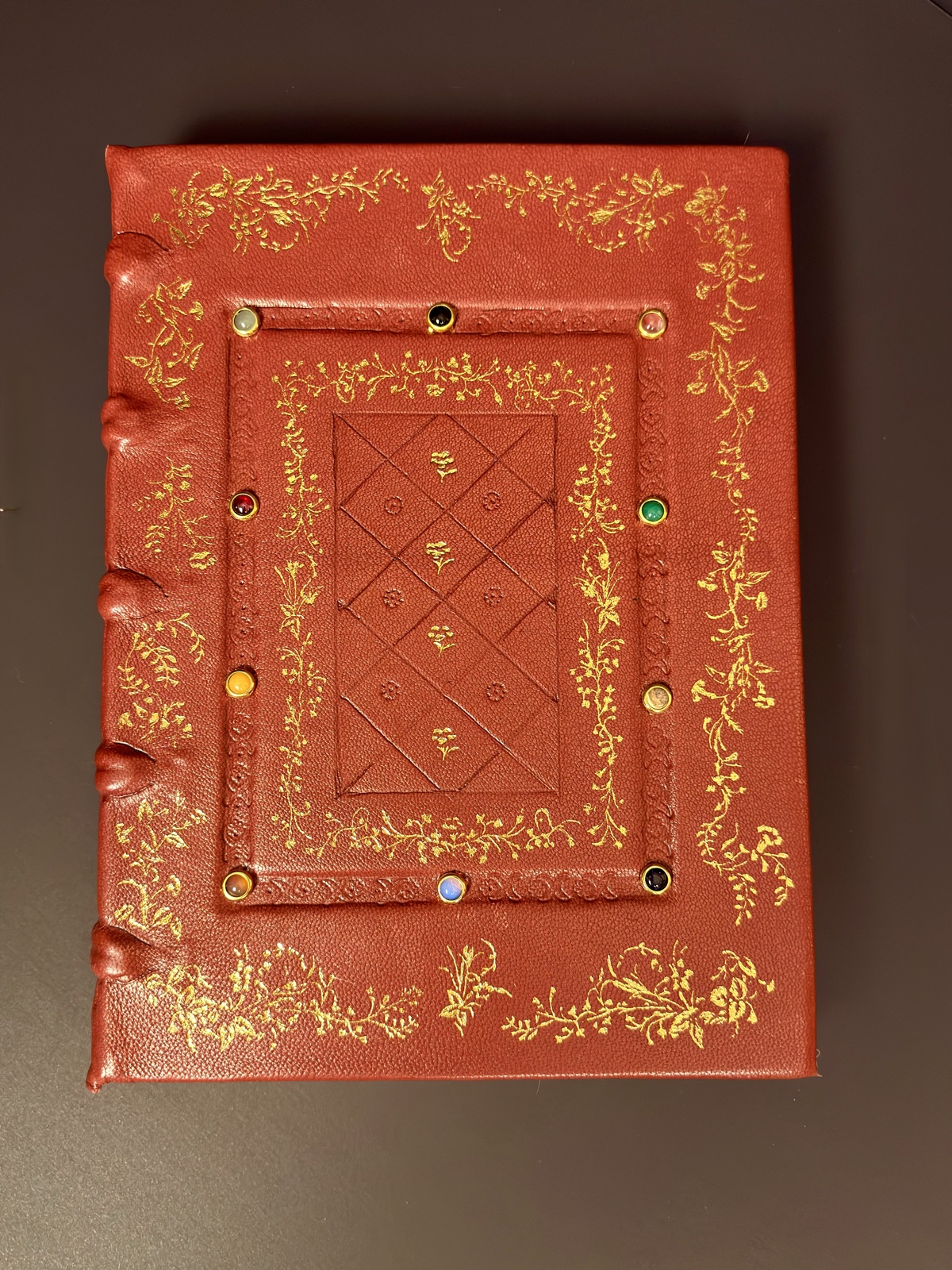
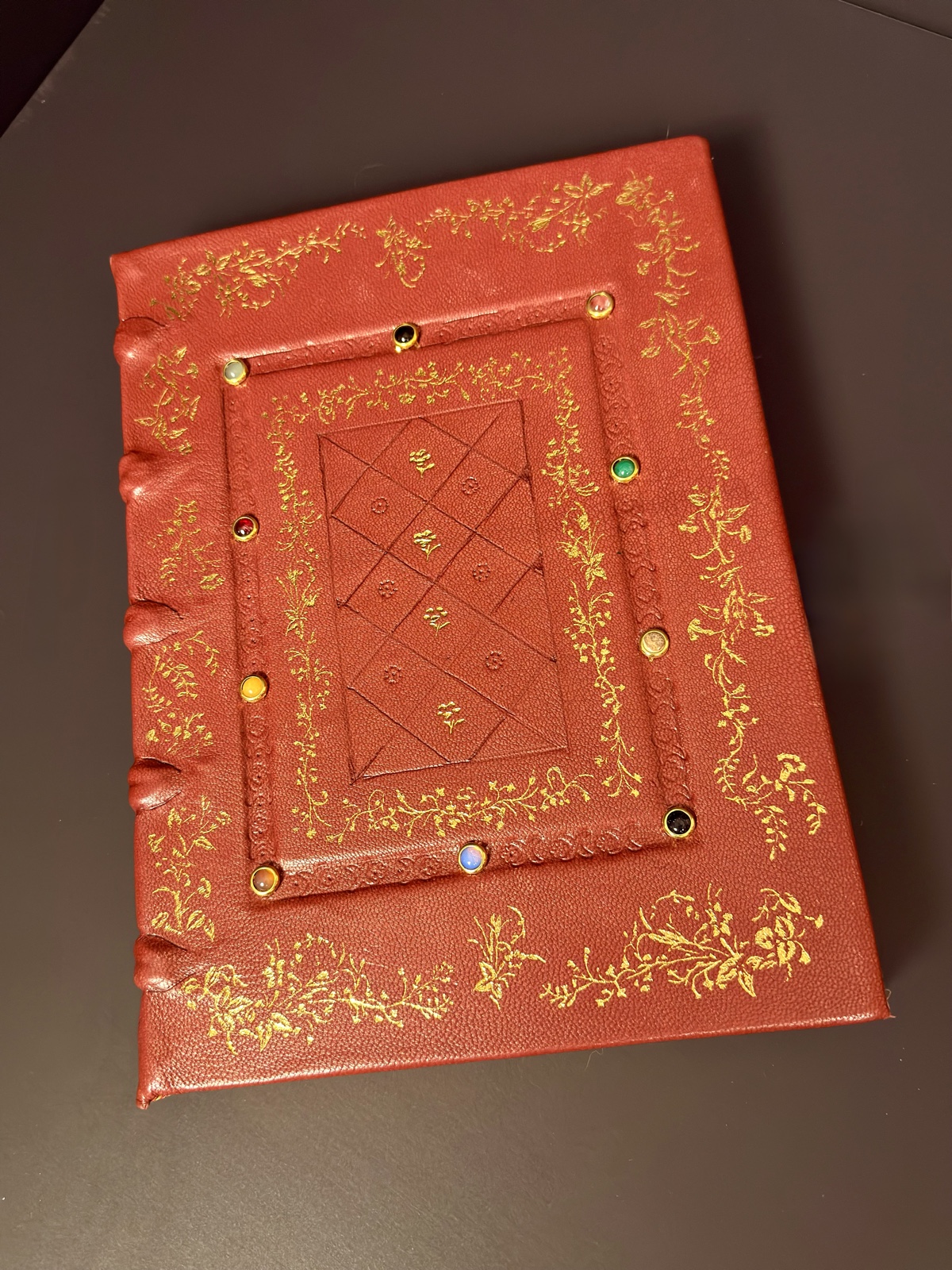
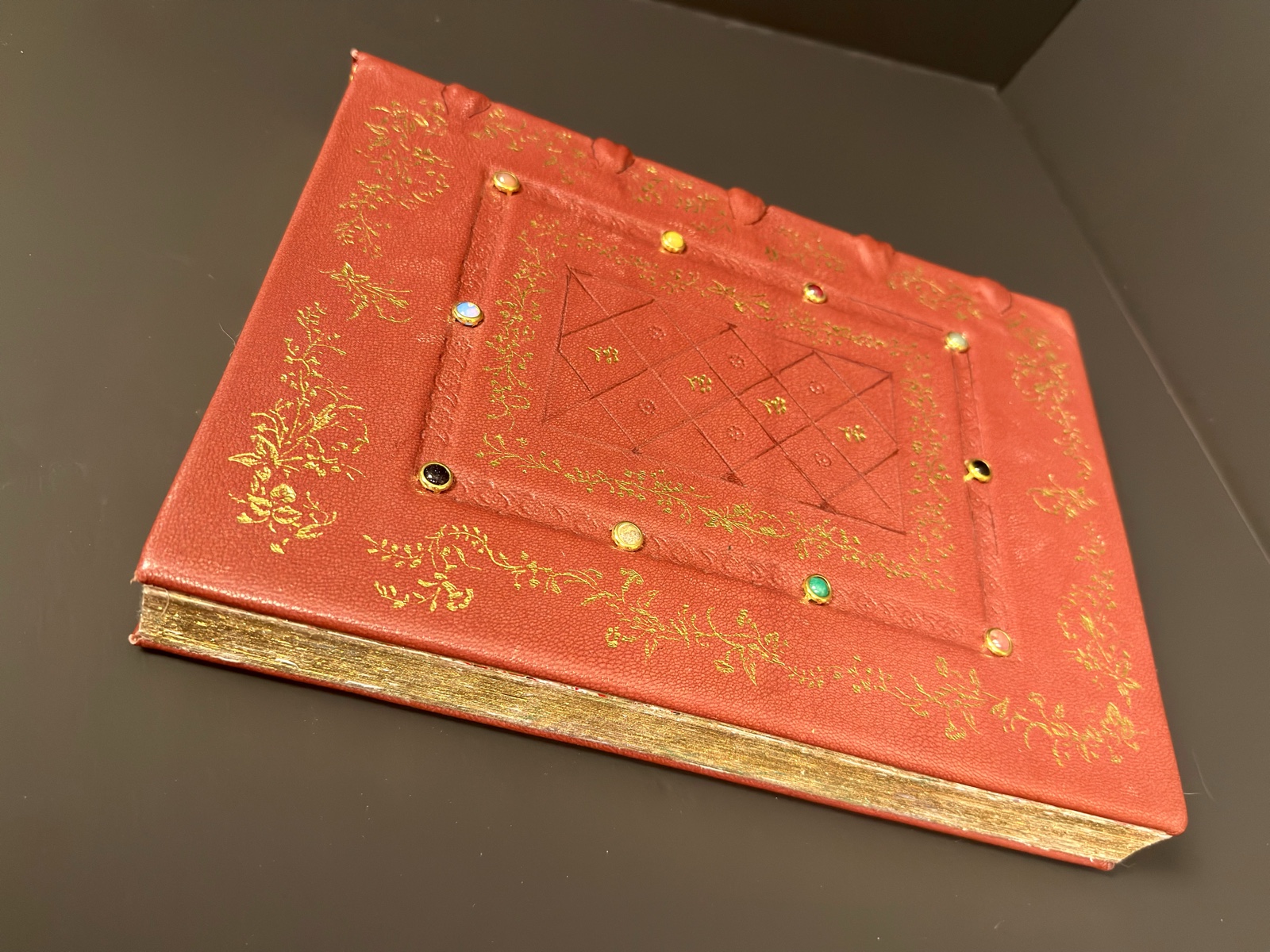
The book shown here is Debbi's own Magical Record, made for her own practice to her own specification. It is not for sale. It is the maker's example of this tier, and every commission starts from a conversation about how yours will differ from it.
The structure is the same as the Full Goatskin binding: folded signatures sewn on supports, boards laced in, full Alran goatskin. Here the goatskin is M02 Ruby Red. Any colour in the Alran range can be had.
The front board carries a tooled double-rule border set with twelve cabochon stones in gold bezels: onyx, moonstone, malachite and amber. The stones, their number and their placement are chosen with you. Inside, two endpaper treatments: Japanese chiyogami in a cherry-blossom pattern and a hand-marbled paper in the peacock-feather pattern, both period-appropriate, both selected rather than assigned.
The page edges are burnished gilt. Closed, they show nothing but gold.
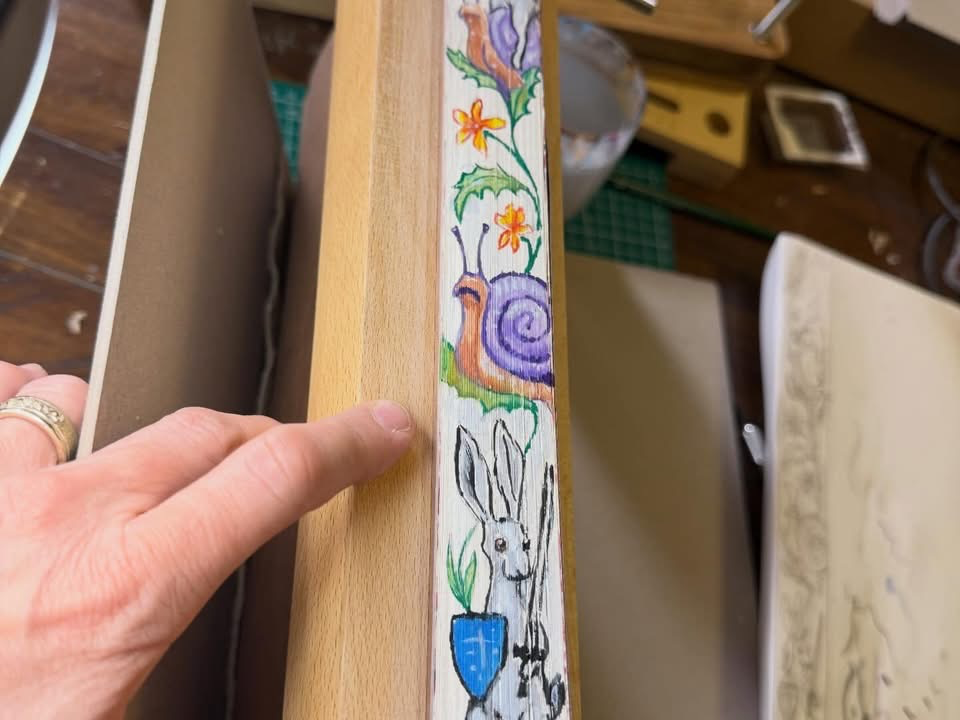
Fan the pages at the correct angle and something else appears. Beneath the gilt is a painting in watercolour, laid onto the page edges while the block is clamped in a fan, then gilded over. It is visible only when the pages are deliberately splayed and it vanishes when they close. The technique belongs to the English fine binders of the seventeenth through nineteenth centuries and is among the most demanding in the craft. On this book the painting is medieval marginalia: the rabbits and hybrid creatures that have lived in the margins of sacred manuscripts since the thirteenth century. On yours, it is whatever you decide, and it belongs to you alone.
Every commission is built from a conversation. Leather colour, stones, endpapers, text block dimensions and the subject of the fore-edge painting are each settled in direct consultation and confirmed in writing before the book is begun. $2,250 is the base commission price; additional scope is quoted separately once the specification is agreed.
No two will be alike.
Which One
If you want a serious book that will outlast you, in the right structure, in real leather, and you would rather spend on the years of use than on the decoration, the Full Goatskin binding is the answer, and it is the one most practitioners should buy.
If the book is to carry the marks of your own work on its outside as well as its inside, and you want the edge that keeps a secret, that is the Gilt and Fore-Edge binding.
From $1,250 — varies by finish · Made to order · Handmade in Virginia